
Check the actual conditions
Coastal day
Use the beach guide for orientation and current notices for the actual outing.
A sunny photograph is not a sea-condition report.
BEYOND THE POSTCARD. / PLAN WITH THE ELEMENTS
A month gives you context. The day gives you the decision. Understand Da Nang’s seasonal rhythm, then keep your beach, city and excursion plans ready to adapt.
Plan your visit ↓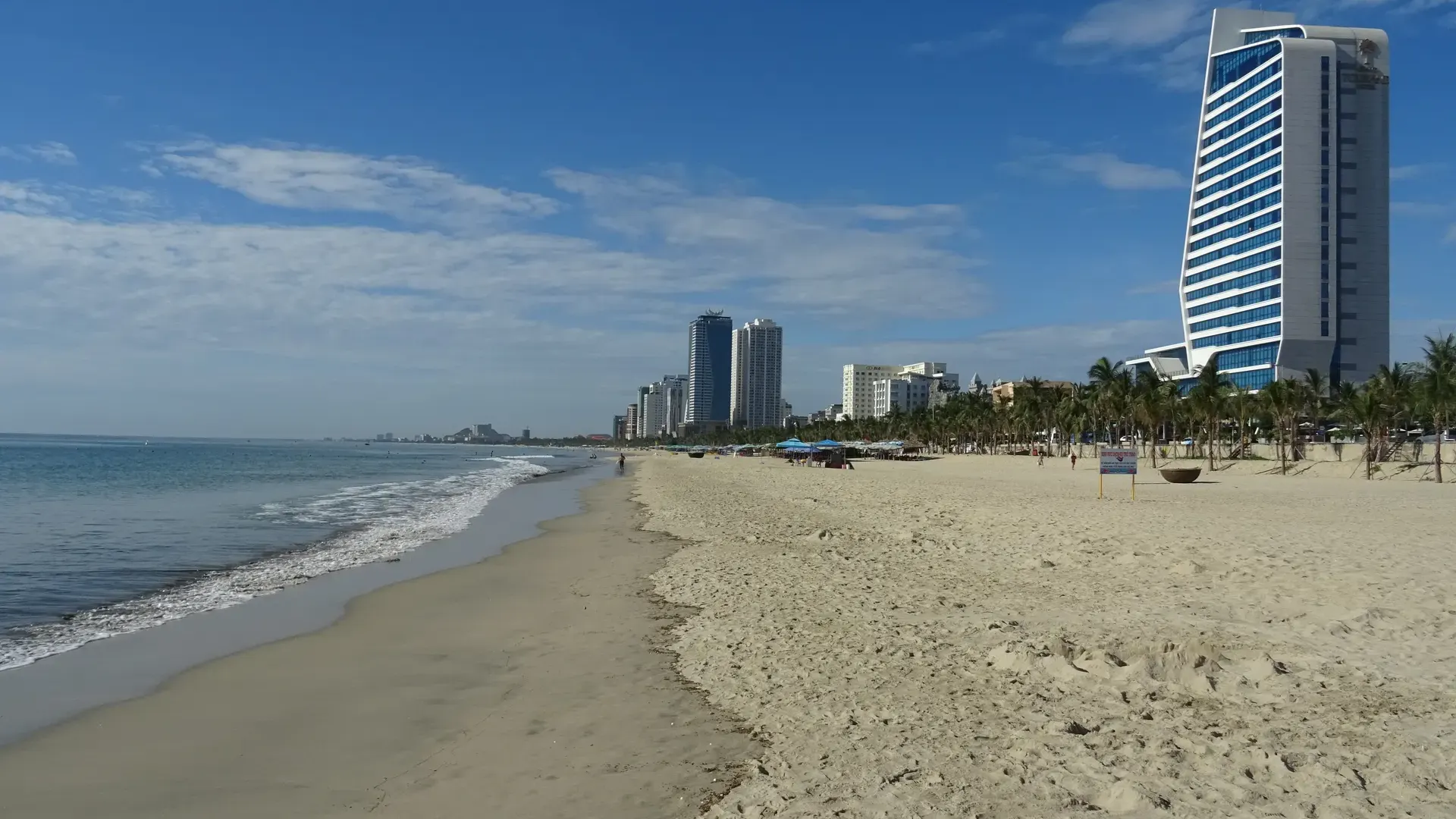
Source-led staging guide · Named local seasonal observations and native Vietnamese approval pending.
Visitors comparing Da Nang months can use Vietnam Tourism’s seasonal guidance as orientation: March to May is a useful warm-weather shortlist, June to August is described as less rainy, and November to February as rainy. These are broad patterns, not daily forecasts or swimming advice. Use current national bulletins and actual operator instructions before each weather-sensitive outing.
Vietnam Tourism — Da Nang · National Center for Hydro-Meteorological Forecasting ·
Qualitative groupings from Vietnam Tourism, not a forecast or measured monthly averages. Check current dated national bulletins and actual service instructions.
| Month | Source context | Planning question |
|---|---|---|
| January | Within the November–February rainy grouping | What alternative would you enjoy if the outdoor plan changes? |
| February | Within the November–February rainy grouping | What alternative would you enjoy if the outdoor plan changes? |
| March | Within the March–May warm visiting window | Do the current forecast and actual activity suit your group? |
| April | Within the March–May warm visiting window | Do the current forecast and actual activity suit your group? |
| May | Within the March–May warm visiting window | Do the current forecast and actual activity suit your group? |
| June | Within the June–August less-rainy grouping | Do the current forecast and actual activity suit your group? |
| July | Within the June–August less-rainy grouping | Do the current forecast and actual activity suit your group? |
| August | Within the June–August less-rainy grouping | Do the current forecast and actual activity suit your group? |
| September | Within the September–October warm visiting window | Have you checked the current outlook rather than assuming dry days? |
| October | Within the September–October warm visiting window | Have you checked the current outlook rather than assuming dry days? |
| November | Within the November–February rainy grouping | What alternative would you enjoy if the outdoor plan changes? |
| December | Within the November–February rainy grouping | What alternative would you enjoy if the outdoor plan changes? |
Vietnam Tourism — Da Nang · National Center for Hydro-Meteorological Forecasting ·
Compare the actual destination and service for each outing, not just the city’s month label.
Check the actual conditions
Use the beach guide for orientation and current notices for the actual outing.
A sunny photograph is not a sea-condition report.
Have a real alternative
Combine food and culture with confirmed entrances and operating details.
An indoor label does not verify opening or access.
Confirm independently
Check the destination, collection, operation and return with the actual provider.
City conditions do not establish the entire journey.
Vietnam Tourism’s Da Nang destination page gives a broad seasonal description rather than a station dataset. Its month groupings help you identify what to investigate when choosing a trip. They do not tell you what will happen during a specific week. The national forecasting centre publishes dated land, marine and hazardous-weather information. Read the relevant area and period rather than using an old screenshot or a national headline as your local forecast.
The overview below deliberately uses qualitative descriptions. No monthly temperature average, rainfall total, probability or number of sunshine days is claimed without a checked dataset and its reference period. The groupings follow the cited tourism page and should not be treated as fixed season boundaries. Weather can vary within a month. Use Best Time to Visit to choose date options; use this page to connect seasonal context with the decisions you will recheck.
Vietnam Tourism — Da Nang · National Center for Hydro-Meteorological Forecasting
The cited national destination page places January and February within its November-to-February rainy description. Treat that as a reason to compare a flexible trip rather than a prediction that every day will be wet. Choose what you would enjoy if an outdoor priority changes. A museum visit, meal or café can be part of the intended experience, but confirm current opening, service and the actual entrance separately. This guide does not certify any indoor venue as available.
When choosing accommodation, compare the real approach to the property and the journeys you expect to make, not just the mood of a coastal image. Keep your transport decision connected to the activity so one change does not leave the other unresolved. Ask how the provider handles weather-related changes for your exact service. No discount or lower crowd level is verified for these months, and no month is labelled unsuitable for every traveller.
Vietnam Tourism includes March to May among warm-weather visiting windows and describes June to August as having less rain. These descriptions are useful for early comparison; they do not establish the conditions on your actual date. If spending time outdoors is central to the trip, plan rest opportunities and an alternative you want to do. A calendar label alone cannot confirm comfortable conditions for every person in the group or a suitable route at a particular hour.
Compare beach, city and excursion plans separately. A fine-looking city morning does not verify the sea, a mountain viewpoint or the road to a day-trip destination. Read current information and ask the relevant operator about the actual activity. Keep the group’s needs and the return arrangement visible when plans change. No universally safe beach month, guaranteed clear viewpoint, daily temperature or inspected outdoor route is established by this staging guide.
The destination page includes September and October among suggested warm visiting windows, then describes November to February as rainy. Do not turn the earlier recommendation into a promise of dry weather or an absence of disruption. National bulletins have a different role: they supply current, dated information for the relevant area. Compare the two kinds of information without pretending a tourism description is a live warning system or a forecast for your booked stay.
Keep weather-sensitive commitments flexible where the actual terms allow, and follow current official and on-site instructions. Ask each provider how a change affects the service, payment and rescheduling. An attractive off-season headline does not prove a saving, room availability or a running tour. If an event drives the dates, verify the organiser’s current announcement separately. This page does not reproduce storm tracks, issue alerts or declare any upcoming date safe for an activity.
Use the beach guides for destination orientation, then assess the actual outing using current notices and on-site instructions. A map search locates a place; it does not certify access, water conditions or an inspected route. For a city day, connect the exact entrances with transport and confirmed service details. An indoor alternative still needs an opening and availability check. A general seasonal description cannot do those tasks for the specific business you intend to visit.
For a longer excursion, confirm destination conditions and operation independently of the city. Ask about collection, the activity, return and weather-change terms with the actual provider. Ba Na Hills, Son Tra and day-trip plans require their own current checks; a sunny coastline photograph cannot establish visibility or service elsewhere. The My Son Sanctuary route remains a labelled preview. No excursion is bookable through this page, and transport and activity may belong to different parties.
Build a packing list around the forecast near departure, the activities you have confirmed and the requirements of the group. Think through carrying bags, keeping essential travel information usable and having an alternative if the day changes. Ask the operator about equipment that belongs to the activity rather than assuming it is included. This is a planning method, not personalised health advice or a verified equipment list for every tour, season or traveller.
Compare complete costs rather than assigning a fixed budget to a month. Keep actual quotes, inclusions and change conditions together. Confirm whether moving an activity affects transport or another reservation and which provider is responsible. The Budget guide explains complete quote comparisons; no weather-season fare, refund entitlement, hotel price or lowest-cost period is invented. A future deal will need its own merchant-approved dates and terms, separate from this editorial weather context.
Before travel, open the official information again and verify the issue time and period that apply to your location. Before an outing, confirm the actual activity, pickup and return with the provider and follow current instructions at the site. Share the same reference within the group so an older screenshot does not become the plan by default. Keep one decision record for what is confirmed and what remains flexible.
Named seasonal observations, original dated photographs and native Vietnamese approval are still pending for this draft. Future verified business cards can explain approved indoor alternatives, operating periods and weather-change terms, with clear sponsorship and referral disclosure. They cannot turn a monthly guide into an operating guarantee. No newsletter signup, booking or member deal is open yet. Follow @eyesondanang for project updates or send a source-supported correction through the visible correction route.
EYES ON DA NANG · LOCAL CONNECTIONS
Verified seasonal business profiles are not available yet. Future hotel, restaurant and tour cards will carry approved details, dated checks and commercial disclosures.
Check actual dates and change terms.
Confirm the setting and service.
Verify operation and weather-change rules.
Explore recommendations and business categories ↗
Future profiles can explain indoor alternatives, seasonal operation and weather-change terms with owner approval and dated evidence. Business facts remain in the independent registry. Sponsored placements and referrals require disclosure; bookings and member deals are not open.
Prepare a future profile ↗Visitors comparing monthly patterns and planning flexible beach, city or excursion days. Use the overview to frame questions, then check current forecasts and the actual service rather than treating a month as a guarantee.
Compare actual complete costs and change terms for your dates. The cited national tourism guide suggests March to May among warm visiting windows; no cheapest month or weather-related discount is verified here.
Compare a coastal outing, a city day with a confirmed indoor alternative and a longer excursion. Check each destination and operator independently; the city forecast cannot certify every activity.
Recheck current dated forecasts and notices, activity operation, access, transport, return arrangements, availability and weather-change terms. A seasonal overview, photograph or source-access date is not a live forecast.
Sources read October 1, 2026. Tourism guidance provides seasonal orientation; the national forecasting centre is the route to current dated bulletins. Month boundaries are not weather guarantees. No station-normal dataset, live forecast, current prices or first-hand observations are published. Named local review, native Vietnamese approval and image rights remain pending.
Send a correction via @eyesondanang ↗Follow @eyesondanang as practical guides and the verified local-business network develop. Newsletter signup and member deals are not open yet.
@eyesondanang ↗